
Big data and machine learning spark powerful predictive analytics when they work together. It’s this blend that turns untapped information into clear, actionable forecasts.
Getting Quick Insights On Big Data And Machine Learning
Big data lays down a foundation of vast, varied inputs. Machine learning then dives into that foundation to uncover patterns and build models that predict future outcomes.
In Australia alone, the big data market reached AUD 5.93 billion in 2024, with analysts forecasting a 12.3 % CAGR through to 2034 thanks to growing AI and machine learning adoption. Read the full research about the Australian big data sector outlook.
- Big data channels raw streams into storage, while machine learning refines them into precise predictions.
- Core pipeline steps include collecting, storing and cleaning data before training algorithms for reliable results.
- Teams harness predictive insights to automate decisions, detect trends early and optimise operations.
Comparison Of Big Data And Machine Learning
Below is a quick look at how these two fields differ and complement each other:
| Aspect | Big Data | Machine Learning |
|---|---|---|
| Purpose | Store and manage data at scale | Extract patterns and train models |
| Inputs | Raw streams, logs, sensors | Labeled and unlabeled data features |
| Outputs | Aggregated reports and dashboards | Predictions and classifications |
| Use Cases | Data lakes, ETL pipelines | Anomaly detection, forecasting |
In essence, big data focuses on gathering and organising large volumes of information, while machine learning zeroes in on turning that information into actionable insights.

The snapshot above highlights big data’s three Vs—volume, variety and velocity—essential factors when planning any analytics strategy.
"Big data feeds ML models for smarter decisions."
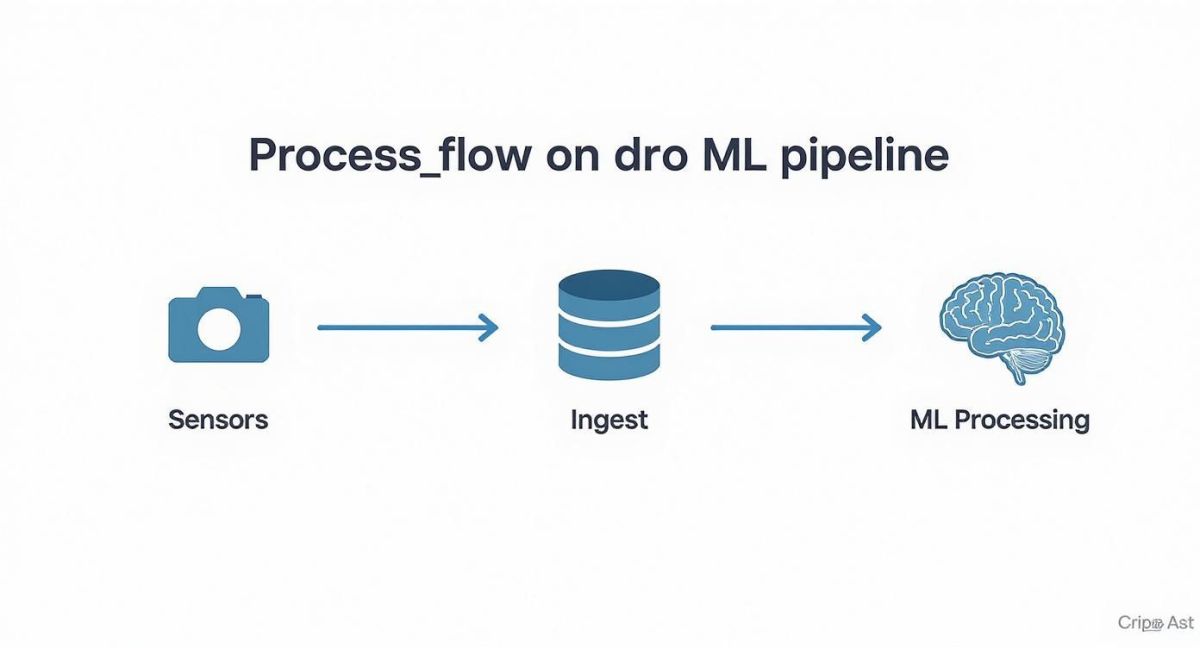
Tracing each step—from data ingestion through model output—reveals a tightly woven process. This foundation paves the way for real-time UAV analytics. Next, we’ll use a library analogy to show how big data acts like a vast collection and machine learning the librarians who bring it all to life.
Understanding The Key Concepts

Big data is like wandering into a vast library where endless shelves hold stories waiting to be told. Machine learning steps in as the expert librarian, linking themes and uncovering narratives hidden among the volumes.
Under the hood, data pipelines are the threads that weave raw entries into neat, searchable records. They guarantee consistency and quality before any analysis begins.
- Data Ingestion brings in raw sensor readings or logs and stores them safely.
- Data Preparation cleans the inputs and normalises formats for smooth model training.
- Model Training & Tuning sharpens algorithms so they spot patterns and predict with confidence.
Building Data Pipelines
Each pipeline stage tackles a clear task, moving data from its raw state to a format machine learning engines can digest. It’s like transforming a jumbled manuscript into an indexed reference guide.
Data integrity is the backbone of reliable machine learning.
Once the data is refined, algorithms dive in to detect correlations and anomalies. Imagine an agricultural drone comparing images over time and flagging shifts in crop health by analysing pixel changes.
Learn more about geospatial context in our guide on geomatics.
These steps turn static noise into practical intelligence for unmanned aerial applications. By 2024, the machine learning market in Australia reached approximately USD 620 million and is projected to grow at a 43% CAGR through 2033. Australian Machine Learning Market Report
Connecting Big Data And Machine Learning
Big data delivers the scale—capturing vast volumes of telemetry and imagery. Machine learning then weighs those details, highlights trends and draws out insights that human analysts might miss.
This partnership drives smarter outcomes in scenarios like precision farming, infrastructure inspection and search-and-rescue. For a deeper dive into how machine learning powers business processes, consider understanding AI automation and its integration with machine learning.
Here’s how the three Vs shape drone analytics:
| Characteristic | Role In Drone Operations |
|---|---|
| Volume | Grows storage without analysis; ML filters down to critical insights. |
| Velocity | Supports time-sensitive decisions with live data streams. |
| Variety | Tests uniform models but lets ML adapt across diverse sensors. |
By threading these elements together, you build systems that generate real-time alerts and adaptive flight paths. Ultimately, UAVs can pinpoint subtle anomalies in structures, vegetation or weather—just like a librarian spotting a rare first edition.
"A clear pipeline turns data noise into precise foresight."
- Identify the data sources on your UAV sensors for targeted collection.
- Establish ETL routines that clean and normalise flight logs.
- Select and train ML models aligned with your mission goals.
- Monitor model performance and iterate as new data arrives.
Now you’ve mapped the library-and-librarian analogy to data pipelines and ML models. Next up, we’ll explore advanced analytics techniques for unmanned aerial systems.
Happy mapping insights ahead! Enjoy.
Integrating Big Data And Machine Learning With Drones
Drones today carry more than cameras—they’re rolling sensor suites feeding us an endless stream of information. When we tap into big data platforms and sprinkle in machine learning, these flying machines start making sense of their own discoveries.
Think of data as raw ingredients on a chef’s bench. Without the right recipe, it’s just clutter. Machine learning algorithms act like a seasoned cook, blending spectral images, LiDAR points and heat maps into clear guidance for flight paths and real-time alerts.
Here’s how the data pipeline unfolds in the field:
- Sensors capture multispectral images and LiDAR scans with every pass.
- Streams move to a ground station or cloud store, waiting for a quick clean-up.
- ML engines train and refine models on a mix of tagged and untagged data.
- The output loops back into the drone—adjusting routes or flagging components on the fly.
Of course, hauling terabytes of imagery is no small feat. That’s where big data frameworks step in, smoothing out storage bottlenecks and distributing compute loads. Before you know it, a once-simple camera drone becomes an agile agent, learning as it flies.
UAS Sensor Data Versus ML Processing Requirements
To appreciate how each sensor feeds your analytics engine, let’s break them down side by side.
| Sensor Type | Data Output | ML Application |
|---|---|---|
| Multispectral Camera | Large image tiles | Vegetation stress mapping |
| LiDAR Scanner | Point cloud sets | Terrain modelling |
| Thermal Imager | Heat signature grids | Hotspot detection |
| Acoustic Sensor | Audio waveforms | Wildlife monitoring |
Each row shows what you get from the air and how your models can turn it into insight. Having this clarity up front helps engineering and ML teams sync on throughput and latency needs.
Real Time Drone Insights
Once a drone takes off, the clock is ticking. Real-time analytics turn raw feeds into alerts in mid-flight. For instance, predictive maintenance models might spot rotor wear before it ever becomes an issue.
By 2025, Australia’s AI industry is set to pull in AUD 2.6 billion, underlining the appetite for smarter unmanned systems. Explore AI industry projections
On-screen dashboards blend sensor maps with live model scores. Pilots tweak speed or switch sensor modes at a moment’s notice, guided by those instantaneous insights.
Benefits And Challenges
Integrating big data and machine learning lifts situational awareness and drives efficiency. Yet it also surfaces a few hurdles:
- Consistent data schemas across diverse sensors.
- The balance between edge-side processing and centralised cloud analysis.
- Feedback loops that keep models fresh and unbiased.
Take infrastructure inspections: cracks get spotted early and manual checks drop by 40%. Over in agriculture, smart crop scans trim water use by about 30% with pinpoint irrigation.
Best Practices For UAS Analytics
Begin with a clear mission brief. Match your sensor suite to the insights you need, not the other way around.
Keep your pipeline modular so swapping out a model or dataset never stops the whole show. And don’t forget regular audits—data quality and model performance must stay rock solid.
Rollout checklist:
- Define data retention and privacy standards.
- Set up automated alerts for anomalies in incoming feeds.
- Schedule periodic model retraining and version control.
- Monitor key metrics: latency, accuracy and throughput.
Pairing data lakes with on-board inference means you still get answers when connectivity dips. Follow these steps, and your drone fleet will deliver consistent, clear analytical value—no matter how your missions evolve.
From crop surveys to defence patrols, the smart drone era is all about turning passive sensors into proactive tools. In the next section, we’ll explore how these methods reshape entire industries and drive new business models.
Exploring Real World Applications In Industries
Across multiple sectors, organisations are turning to big data and machine learning to tackle tough challenges. Real examples show how data-rich UAV operations can drive measurable results.
We’ll walk through mini case studies that trace the problem, detail the data pipeline, pick the ML model and reveal clear outcomes. Each story highlights cost savings, efficiency gains and fresh insights.
Here’s an overview of the industries covered:
- Precision agriculture using aerial imagery to detect crop stress before symptoms show
- Energy and utilities streaming sensor feeds into predictive models to flag faults early
- Infrastructure inspection mapping corrosion and cracks with 3D point clouds
- Environmental monitoring tracking habitat shifts and biodiversity via thermal readings
Precision Agriculture Use Case
A grain farm in NSW was battling uneven yields across paddocks. Drones flew twice weekly, capturing multispectral and RGB images. An ML model then pinpointed stressed zones with 92% accuracy, guiding targeted treatments.
The data pipeline handled gigabytes of imagery:
- Data Ingestion: Vision captures landed in a centralised data lake
- Preprocessing: Noise was cleaned and images aligned for training
- Model: A convolutional neural network sorted healthy from stressed crops
As a result, farmers slashed water use by 30% and boosted yield by 18% within one season.
“Precision farming models spot issues days before manual inspection.”
Energy Sector Maintenance
In Victoria, an electricity provider inspected 400 km of transmission lines with drone-mounted thermal and acoustic sensors. Streams ran 24/7 into a Hadoop cluster. A random forest classifier flagged hotspots and corroded connectors days before outages.
Key steps included:
- Capturing sensor streams at sub-second intervals
- Filtering and aggregating data at edge nodes
- Training the model on labelled fault scenarios
- Dispatching alerts to field crews via mobile apps
Edge filtering cut data transfer by 60%, speeding up both model training and live analytics.
Learn more about integrating drone data with GIS in our guide on drones and GIS to unlock spatial analytics.
To see the significant impact of big data and machine learning in action, explore the world of AI automation for business, where intelligent systems learn and adapt.
Infrastructure Inspection And Safety
A civil contractor in Queensland mapped 12 bridges for corrosion and structural faults. Nightly drone flights gathered LiDAR point clouds and high-resolution photos. Their ML pipeline then ran clustering and anomaly detection to flag potential defects.
Inspection frequency rose from quarterly to monthly. Manual checks fell by 40%, saving AUD 300,000 in annual labour. Digital twins updated in near real time, improving maintenance planning.
- Faster inspections and lower costs
- Proactive repairs before failures occur
- Enhanced safety through predictive alerts
Cross Sector Takeaways
These mini case studies demonstrate how big data and machine learning unite to boost operational efficiency across industries. Many organisations see ROI in under six months when drone data meets predictive analytics. Yet scalable success depends on solid data governance, regular model refreshes and smart edge computing.
Start by defining clear objectives and matching sensors to insights. Next, build a robust ETL pipeline that filters and aligns data before training. Finally, set up monitoring dashboards with threshold alerts for real-time decisions.
- Maintain consistent data labelling to reduce bias
- Use cross-validation to ensure model reliability
- Schedule periodic retraining with fresh datasets
- Store data securely and comply with regulations
By following these steps, teams can scale big data and machine learning initiatives in drone operations with confidence and measurable impact. The synergy between data and ML equips industries to achieve sharper predictions, faster insights and tangible savings.
Recognizing Benefits And Challenges
Organisations are tapping into big data and machine learning to make split-second decisions, deliver mission-specific insights and spot maintenance needs before they become critical. Yet, these perks aren’t handed to you on a silver platter—practical hurdles can slow UAS projects if you don’t tackle them head-on.
- Faster Decisions: Crunching terabytes of flight logs in seconds lets operators reroute drones mid-mission.
- Personalised Insights: Embedded ML models adjust sensor settings on the fly, whether you’re scanning forests or inspecting powerlines.
- Predictive Maintenance: Early warnings about rotor wear or battery issues can shave off up to 40% of unplanned downtime.
Quick Case Study
A mining company combined LiDAR point clouds with vibration records to train an ML system that flags potholes and surface ruts. The payoff was immediate: a targeted maintenance schedule cut downtime by 30%, while survey expenses fell by 20%.
Their secret? A mix of aerial data analysis and close collaboration between geotechnical, operations and data teams. This framework then rolled out seamlessly across three separate sites.
Data Quality Roadblocks
Often, data pipelines look more like polluted waterways than pristine streams. Raw sensor feeds brim with gaps, format mismatches and repeated entries—you’ve got to clean all of that before it feeds your models.
Cleaning data is like turning a murky creek into clear, drinkable water—nothing useful comes through until it’s filtered.
- Set up automated validation checkpoints to catch outliers early.
- Enforce consistent data schemas so every entry speaks the same language.
- Deploy transformation tools that normalise formats before training begins.
For instance, running deduplication scripts shrank a logistics dataset from 2 million rows to 1.5 million valid records in mere minutes. That kind of discipline keeps analytics honest and prevents flawed predictions.
Algorithmic Bias Risks
Machine learning can inadvertently echo the biases hidden in its training sets. Uneven samples or mislabelled data skew results and may even breach regulations.
| Bias Challenge | Mitigation Strategy |
|---|---|
| Skewed Training Data | Balance sampling; apply data augmentation |
| Labeling Errors | Introduce review cycles with subject experts |
| Feedback Loop Drift | Monitor outputs; retrain models frequently |
Regular audits and a human-in-the-loop approach stop bias from creeping into autonomous decisions. Tools like SHAP or LIME shine a light on model decisions, helping teams nudge fairness back into play before live deployment.
Infrastructure Costs And Talent Shortages
Handling large-scale data storage and running intensive ML workloads demands rock-solid infrastructure—and that doesn’t come cheap. Add in the scramble for skilled engineers and data scientists, and budgets and hiring timelines can get stretched.
- Adopt cloud platforms with pay-as-you-grow plans to align costs with demand.
- Build modular pipelines that flex between edge nodes and central clusters.
- Launch in-house training initiatives to build expertise internally.
For long-running programmes, a hybrid approach often wins: process critical tasks at the edge to cut down data transfer fees and keep analytics humming even if connectivity wavers.
Practical Tactics For Success
Here’s a roadmap to transform common challenges into tangible wins:
- Define measurable goals for data quality, bias mitigation and cost control.
- Implement continuous monitoring with automated alerts for data drift.
- Schedule regular model retraining using fresh, balanced datasets.
- Allocate resources for scalable infrastructure and ongoing staff development.
- Embed domain experts throughout the workflow to validate outcomes.
- Track ROI metrics to fine-tune budgets and prioritise high-impact activities.
With clear governance, periodic reviews and flexible planning, your UAS analytics programmes will thrive—turning every obstacle into an opportunity for smarter, more reliable drone operations.
Implementing Best Practices And Actionable Roadmap
If you’ve ever seen a UAS initiative stall because data wasn’t aligned or models went off track, this guide is for you. We’ll move from governance and versioning all the way to scaling your solution, with clear checkpoints at each stage.
Data Governance And Compliance
Think of data governance as your flight plan: it lays out who owns each dataset, where information is stored and the checks that keep everything airworthy.
A robust policy prevents silos and helps you meet regulatory requirements. Automating metadata tagging, for example, can cut manual audits by 60%, boosting confidence in your insights.
- Define data-ownership roles with clear access levels and duties
- Set up storage tiers across edge, on-premise and cloud with retention rules
- Schedule regular quality checks, validations and audit trails
- Build a central data dictionary so every schema stays consistent
Check out our guide on software for UAV platforms to support data governance, security and integrations.
It also provides templates for versioning, audit logs and policy frameworks you can adapt.
Model Reproducibility And Version Control
A reproducible model is like a black-box recorder—you can trace every input and hyperparameter back to its source.
- Create ML pipelines with fixed inputs, environments and seed values
- Use containers to standardise compute, ensuring code runs identically everywhere
- Store model artefacts and logs in secure, write-once repositories
With this in place, any engineer can rerun experiments or review past training outcomes.
Continuous Learning Pipelines
Static models lose accuracy fast when sensor data shifts. A continuous pipeline keeps your analytics fresh by retraining on new UAS feeds.
- Build ETL flows that channel fresh sensor streams straight into retraining jobs
- Automate validation tests to compare fresh models against production benchmarks
- Trigger retrains when drift thresholds exceed limits or on a set schedule
For instance, in a federated learning setup, drones exchange insights without sending raw images offsite.
Cross Team Collaboration
When data engineers, pilots, analysts and compliance officers share the same view, projects move smoothly.
- Host sprint reviews covering data drift, model updates and mission results
- Maintain a shared glossary for terms like telemetry, payload data and inference scores
- Rotate team roles occasionally to spread domain knowledge and spark fresh ideas
Shared notebooks with version history and integrated chat channels help everyone stay in sync.
Emerging Trends To Prioritise
New developments can cut latency and keep data private, even in complex missions.
- Edge inference nodes handle initial processing at flight altitude
- Federated updates reduce raw data transfer, boosting both privacy and efficiency
- Ethical audits track model bias, performance and decision rationale over time
Putting these ideas into practice now positions your UAV fleet for resilient, privacy-aware analytics.
- Define pilot scope, success metrics and data sources
- Establish monitoring KPIs: latency, accuracy and throughput
- Plan scale phases from pilot to production deployments
- Review and refine the roadmap quarterly with all key stakeholders
Measure outcomes early and iterate quickly to stay on course.
With these best practices and a clear roadmap, your team will deliver dependable big data and machine learning in UAS operations.
Start small, validate often and expand steadily for long-term success.
Scale once you hit performance, governance and collaboration targets.
Continuous Improvement Cycle
- Plan a new feature or dataset based on mission feedback
- Execute ETL builds and model training in isolated environments
- Check performance against KPIs and drift indicators
- Act on insights by updating pipelines, policies or team roles
- Scale changes gradually, ensuring each step stays within compliance
This Plan-Do-Check-Act loop builds resilience, agility and lasting accuracy in drone analytics.
Final Takeaways
Combining best practices with a step-by-step roadmap slashes risk and accelerates time-to-value.
Whether you oversee mapping UAVs or LiDAR drones, these steps ensure your analytics scale smoothly.
Start pilot projects today and measure progress with clear metrics.
Scale once you hit performance, governance and collaboration targets.
Case Example UAV Pilot
A regional utility used this roadmap to inspect 200 km of powerlines with thermal cameras. In just a few months, inspection time dropped by 35%, while fault detection jumped by 50%.
By standardising data flows and retraining models weekly, they achieved near-real-time safety alerts.
- Weekly model retraining cut false positives by 20%
- Cross-department reviews guaranteed data quality and mission alignment
Your Next Steps
- Define a small-scale pilot with clear goals and a timeline
- Assemble a cross-functional team of engineers, pilots and analysts
- Launch your first data ingest and run an initial ML training cycle
- Evaluate results, refine pipelines and scale up in stages
Ready to elevate your UAS analytics? Get started now.
Fly smarter, analyse faster.
FAQs On Big Data And Machine Learning
Getting started with a new big data and machine learning project can feel overwhelming. First, clarify your business objectives: what decisions must this system inform? Then map out your data sources—everything from sensor logs to user interactions.
Next, pull together a diverse team. You’ll lean on data engineers to shepherd raw data through ingestion and cleaning. Data scientists will refine and tune algorithms. And don’t forget MLOps specialists who automate deployments and keep a watchful eye on system health.
“Teams that collaborate across roles build more resilient pipelines.”
Maintaining data quality is at the heart of every successful workflow. Set up automated checks as data arrives, stick to well-defined schemas, and flag anomalies early. Regular audits combined with clear governance help everyone see how data transforms at each stage.
Scaling Your Solution
When your pilot performs well, it’s time to look at scale. Container platforms and orchestration frameworks let you spin up model instances in response to demand. Cloud auto-scaling groups add or remove capacity without manual intervention.
Automated retraining pipelines are vital. By monitoring drift thresholds, the system can trigger retraining jobs whenever performance dips.
If your use case involves unmanned aerial systems, consider moving inference to the edge. Edge computing on drones delivers real-time insights in scenarios like precision agriculture or infrastructure inspections. This approach slashes bandwidth costs and triggers alerts the moment something unusual pops up.
Common pipeline pitfalls:
- Mismatched schemas between data producers and consumers
- Missing version control for code and models
- A lack of monitoring around model drift
Bulletproof your setup by:
- Defining clear data contracts
- Keeping repositories versioned and auditable
- Tracking metrics like latency and prediction accuracy
Next Steps
Keep your documentation current and outline a roadmap with tangible success metrics. Start small with pilot projects that tackle a specific pain point. Finally, measure progress—link every enhancement back to defined KPIs such as cost savings or accuracy gains.
Explore UAS solutions with Innoflight International