
Boosting your profit margin isn't some dark art; it really boils down to two things: making more money and spending less. The best strategies I've seen always tackle this from a few angles at once—smart pricing, cutting down the cost of what you sell, and getting your day-to-day operational expenses in line.
First, Get a Real Handle on Your Current Profit Margins

Before you can even think about improving profitability, you need to know exactly where you stand right now. This is more than just a quick look at your bank balance. It’s about digging into the numbers that tell the real story of your business's financial health.
The starting point is always the same: calculating and truly understanding your three main profit margins.
Each one gives you a different piece of the puzzle, showing you how efficiently your business is running at different stages. Think of it as a diagnostic check-up; it pinpoints where your cash is flowing and uncovers the biggest opportunities to make meaningful changes.
Your Three Core Profit Metrics
To kick things off, you’ll want to get familiar with these key calculations. They offer a layered view of your business, from how profitable your products are at a basic level to what's left in the bank after every single bill is paid.
-
Gross Profit Margin: This tells you how profitable your core product or service is, stripping away all other business expenses. It answers the simple question, "For every dollar of sales, how much is left over after I've paid for the goods themselves?"
-
Operating Profit Margin: This metric is all about how well your business is managed. It takes into account your operating costs—things like rent, staff wages, and marketing. It’s a great indicator of your core business's profitability.
-
Net Profit Margin: This is the big one, the true bottom line. It reveals what percentage of your revenue is left as pure profit after all expenses, including taxes and loan interest, have been deducted. It's the ultimate measure of your company’s overall financial success.
A classic mistake I see is business owners obsessing over net profit alone. You get a much clearer picture by looking at all three. For example, if you have a fantastic gross margin but a tiny net margin, it’s a massive red flag that your overheads are out of control and chewing up all your hard-earned profit.
To make this easier, here’s a quick breakdown you can use to analyse your own numbers.
Your Quick Profit Margin Analysis
This table lays out the three core profit margin types, how to work them out, and what each one really tells you about your business.
| Margin Type | How to Calculate It | What It Tells You |
|---|---|---|
| Gross Profit Margin | (Revenue – Cost of Goods Sold) / Revenue | Reveals the profitability of your core products or services before overheads. |
| Operating Profit Margin | (Operating Income / Revenue) x 100 | Shows how efficiently you manage the business's day-to-day operations. |
| Net Profit Margin | (Net Income / Revenue) x 100 | The final bottom line; the percentage of revenue left after all expenses are paid. |
Running these numbers gives you a solid, fact-based starting point for any changes you want to make.
How Do You Stack Up? Benchmarking Your Performance
Once you've got your margins calculated, the next logical question is, "So… is that any good?" This is where industry benchmarks are incredibly helpful.
Profit margins vary wildly from one sector to another. In Australia, for instance, superannuation funds have eye-watering margins, whereas retail or hospitality businesses operate on much tighter figures. As a general rule of thumb, most businesses should aim for a net profit margin between 5-7% to be considered healthy. Anything north of 7% is a sign you're doing something very right. You can dive deeper into these industry differences in this insightful report on profit margins in Australia.
By comparing your own figures against your industry’s average, you can set realistic, tangible goals. If your margins are lagging, you know it's time to take a hard look at your costs and pricing. If you're ahead of the pack, you can focus on doubling down on what’s clearly working. This analysis is your foundation for building a more resilient and profitable business.
Trim Your Cost of Goods Sold Without Sacrificing Quality
Once you’ve got a firm handle on your profit margins, the most straightforward way to give them a boost is by tackling your Cost of Goods Sold (COGS). This is essentially all the direct costs tied up in making your product or delivering your service—think raw materials and the labour it takes to put it all together.
Bringing down your COGS means more gross profit from every single sale. But let’s be clear: this isn't about switching to the cheapest materials on the market and crossing your fingers. True cost reduction is about being smarter with your sourcing, negotiating like a pro, and running a tight ship, not cutting corners.
Master the Art of Supplier Negotiation
Your suppliers hold a huge key to your profitability. It's surprising how many business owners just accept the price on the invoice without ever questioning it. The truth is, there’s almost always some wiggle room, especially if you’re a reliable, long-term customer.
A great place to start is with payment terms. Could you stretch your payment from 30 days to 60? That simple change can do wonders for your cash flow, giving you more financial flexibility.
And don't hesitate to ask for a better price directly. Think of it as a partnership. If you can give your supplier a clear forecast of your upcoming orders, you're giving them valuable predictability. That’s worth something, so use it as a reason to ask for a small discount.
You'd be surprised how much of a difference a small win can make. A simple 2% reduction in costs from one of your main suppliers could easily lead to a 10% jump in your net profit. Never underestimate the power of these small tweaks.
Smart Sourcing and Inventory Control
Putting all your eggs in one supplier's basket is a risky game. What happens if they suddenly raise their prices or can't deliver? Keeping your options open by researching and building relationships with alternative vendors isn't just good for cost management; it's crucial for keeping your business running smoothly.
Keep an eye out for suppliers who can offer similar quality for a better price. Sometimes smaller, local businesses are hungrier for the work and can provide more favourable terms than the big players.
Of course, getting the materials is only half the battle; how you manage them is just as critical. Poor inventory control is one of those silent profit killers that can slowly bleed a business dry.
- Cut down on production waste: Every bit of scrap material or wasted product is literally money in the bin. Fine-tune your processes to minimise it.
- Don't over-order: Bulk discounts are tempting, but tying up cash in stock that might not sell is a huge risk. Use your sales history to make smarter forecasts.
- Use a "First-In, First-Out" (FIFO) system: If you sell anything with an expiry date, this is a must. FIFO makes sure you sell older stock first, preventing costly write-offs.
When you nail both your purchasing strategy and your inventory management, you’re directly lowering the cost baked into every sale you make. It’s a fundamental step towards sustainably learning how to increase profit margins and making sure every dollar you bring in works as hard as it possibly can.
Rethink Your Pricing to Maximise Revenue
Pricing is one of the most powerful levers you can pull to boost profitability, yet so many businesses get it wrong. It’s easy to fall back on the old cost-plus model—just add up your costs and tack on a standard markup. It feels safe, but honestly, it’s probably leaving a lot of money on the table.
The real secret to unlocking better margins is to stop pricing based on what it costs you and start pricing based on the value you deliver to your customer. This is the heart of value-based pricing. It forces you to ask a much better question: "What problem am I actually solving for my customer, and what is that solution truly worth to them?"
Think about it this way: a marketing agency isn't just selling hours of work; it's selling more leads and bigger sales. A great local coffee shop isn't just selling a drink; it's selling a morning ritual and a welcoming place to be. When you anchor your price to that end result, you can start charging what you're really worth.
Design Pricing That Encourages Higher Spending
Once you’ve got your head around the value you provide, you can get clever with how you structure your prices to nudge your average order value up. Ditching a single, flat-rate price for more dynamic models is a great place to start.
-
Tiered Pricing: Try offering a few packages at different price points—think Basic, Pro, and Enterprise. Each level should add noticeably more value, guiding customers to the option that best fits their needs. You’ll often find they gravitate towards the mid-range or premium packages when the value is clear.
-
Product Bundling: Grouping complementary products or services together is another smart move. Offer the bundle at a price that’s a bit cheaper than buying each item separately. Not only does this feel like a great deal for the customer, but it also increases how much they spend in one go.
A perfect example is a software company bundling its core product with priority support and an advanced training course. The customer gets an all-in-one solution, and the company lands a much larger sale.
Don’t just set your prices and forget about them. Markets shift, competitors change, and customer needs evolve. Your pricing needs to keep up. Regularly check what your competitors are up to, but more importantly, listen to what your own customers are telling you about the value they get from you.
How to Introduce a Price Increase Without Alienating Customers
The thought of raising your prices can be a bit scary, I get it. But it's a vital part of running a growing, profitable business. The trick is to handle it with transparency and confidence.
Start by doing a little homework. You could survey a small group of your most loyal customers or simply analyse what your competitors are charging to get a feel for what the market will bear.
Many Aussie businesses managed to build healthier profit margins into their pricing as we moved past the pandemic. In fact, by 2023, gross corporate profits grew to nearly 30% of the national GDP, and a big part of that was due to these kinds of strategic price adjustments. You can dive deeper into this trend in this detailed report on Australian corporate profits.
When you’re ready to pull the trigger, communicate the change clearly and give people plenty of notice. Explain why it's happening. Maybe it’s to cover rising supplier costs, invest in making your product even better, or improve your customer service. When your customers understand that the extra cost translates directly into more value for them, they are far more likely to stick around.
Streamline Operations To Reduce Overhead Costs
While keeping a tight rein on direct costs is a great start, it’s often the overheads—the quiet, ongoing expenses of just keeping the doors open—that sneakily chip away at your bottom line. Getting these under control is all about working smarter, not harder. It's about finding efficiencies that free up cash and boost your operating profit margin, all without sacrificing quality for your team or your customers.
Think about all the manual, repetitive tasks your team handles daily. Things like data entry, invoicing, and scheduling are prime candidates for automation with simple, affordable software. Automating these doesn't just cut down on labour costs; it frees up your people to focus on activities that actually make you money, like building customer relationships or driving sales.
Find Savings in Unexpected Places
It’s easy to get laser-focused on the big expenses like rent or wages, but small, consistent savings across a bunch of different areas can really add up. You'd be surprised at the impact they can have on your overall profitability.
Start with a simple audit of all your monthly outgoings. You might be shocked at what you uncover.
-
Software Subscriptions: Go through every single software and service subscription you pay for. Are you still being billed for tools your team ditched months ago? So many businesses suffer from "subscription bloat," paying for several different services that all do the same thing.
-
Energy Efficiency: A few small changes can lead to much lower utility bills. Switching to energy-efficient LED lighting, making sure equipment is powered down overnight, and getting your heating and cooling systems optimised are all easy wins.
-
Supplier Contracts: Don't just look at your raw material suppliers. Review all your service providers, from the cleaners to your IT support. When was the last time you renegotiated terms or shopped around to see what other vendors are offering?
Don't underestimate the power of these small adjustments. I had a client who saved thousands a year just by doing a deep dive into their software subscriptions and cancelling all the redundant tools. It’s often the hidden costs that do the most damage to your profit margin.
Improving your operational efficiency goes hand-in-hand with smart pricing. When your overheads are low, you get to keep more of the revenue from every sale, no matter which pricing model you use.
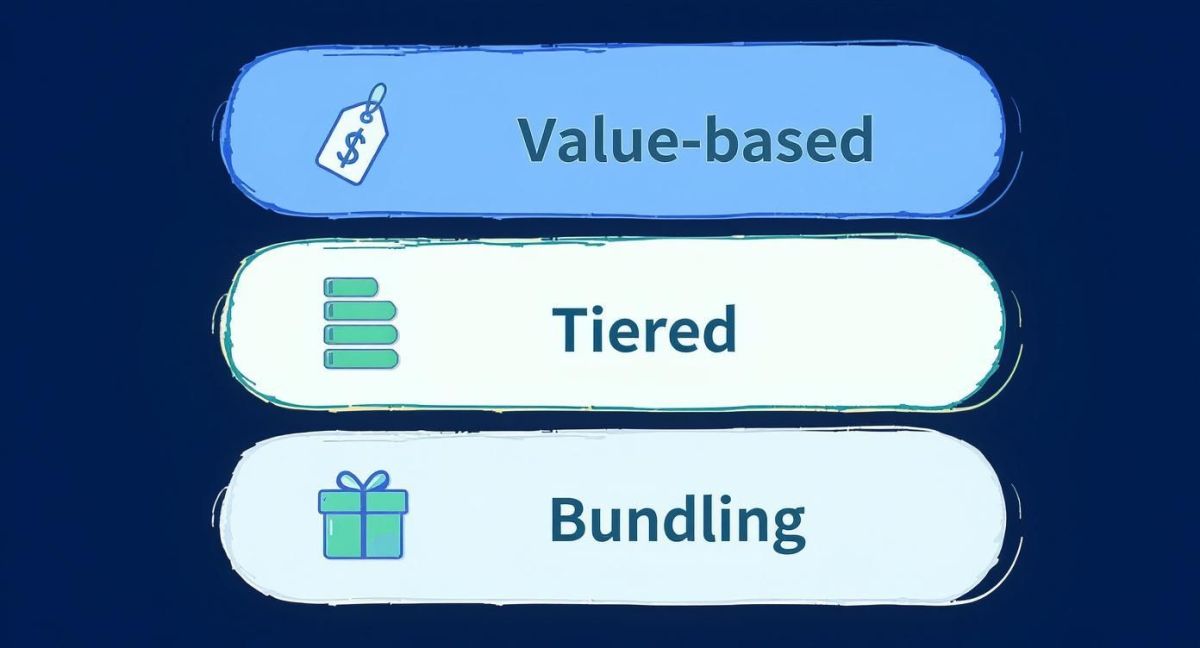
This image breaks down a few popular approaches—value-based, tiered, and bundling—which show how you can package your offers to capture maximum value.
Make Strategic Structural Changes
Beyond the quick wins, it’s worth thinking about bigger operational shifts. Could your business benefit from a more flexible staffing model, for instance? Using casual staff or contractors to handle peak periods, rather than carrying the cost of full-time employees during quiet months, can make a huge difference to your payroll expenses.
To help you prioritise, here's a look at different efficiency strategies, broken down by their potential impact on profit and the effort required to implement them.
High-Impact vs Low-Effort Efficiency Wins
| Efficiency Tactic | Potential Profit Impact | Implementation Effort | Example |
|---|---|---|---|
| Automate Repetitive Tasks | High | Low to Medium | Using accounting software to automate invoicing and payment reminders. |
| Renegotiate Supplier Contracts | High | Medium | Securing a 10% discount from a long-term supplier by signing a new 2-year agreement. |
| Review and Cancel Subscriptions | Low to Medium | Low | Cancelling three unused software subscriptions, saving $150 per month. |
| Adopt a Flexible Staffing Model | High | High | Hiring casual staff for the Christmas rush instead of another full-time employee. |
| Improve Energy Efficiency | Low | Low | Switching all office lighting to LEDs and installing sensor lights in common areas. |
| Go Paperless | Low | Medium | Implementing a cloud-based document management system to reduce printing and storage costs. |
As you can see, you don't always have to invest a massive amount of time or money to see a real return. Start with the low-effort tactics to build momentum.
On a similar note, if your commercial lease is coming up for renewal, get the conversation started early. Landlords are often willing to negotiate to keep a good tenant in place. There are many effective strategies to cut costs available, and in a tough economy, they become even more critical for protecting your bottom line. By systematically reviewing every part of your operation, you can build a leaner, more resilient business where more of your hard-earned revenue actually turns into profit.
Grow Revenue from Your Existing Customers
While landing a new customer always feels like a victory, the real gold is often hiding in plain sight. Looking after your existing customer base is one of the smartest, most cost-effective ways to improve your profit margins. After all, you’ve already done the hard work of earning their trust; now it’s about making that relationship even stronger.
This isn't about being pushy. It’s about being genuinely helpful by showing them how your other products or services can solve more of their problems. This is where upselling and cross-selling come in, and when you get them right, they can make a massive difference to your average transaction value.
Master the Art of Upselling and Cross-Selling
Upselling is simply encouraging customers to buy a better, more premium version of what they’re already considering. A classic example is a software company guiding a user from a "Basic" plan to a "Pro" plan by highlighting extra features they'll genuinely benefit from. The key is to demonstrate clear, tangible value.
Cross-selling, on the other hand, is about suggesting complementary items. If someone is buying a high-end digital camera, offering a sturdy tripod or a protective case is a natural and helpful cross-sell. You’re not just trying to add things to their cart; you're looking to enhance their original purchase.
Here’s how to put these strategies into practice:
- Anticipate their next move. Dig into your purchase data to see what your customers might need next. If someone regularly buys your special blend of coffee beans, they’re a prime candidate for that new grinder you just launched.
- Time it perfectly. Present your offer when the customer is most likely to say yes. A suggestion for a premium upgrade right at the checkout is often far more effective than an email sent out of the blue a week later.
- Make it a no-brainer. Bundle related items together for a small discount. This not only increases the order value but also makes your customer feel like they’re getting a great deal.
Diversify Your Offerings and Create New Revenue Streams
Beyond selling more of what you already have, think about what else you could offer your loyal customers. Launching new products or services that fit your brand is a fantastic way to boost revenue without having to start from square one with customer acquisition.
This could be anything from adding a new service tier, introducing a complementary product line, or even creating educational workshops related to your industry.
A great real-world example comes from Australia's production industry. A huge part of their recent success was expanding into new areas like physical distribution and video, which created entirely new streams of income built on their existing expertise and audience.
This is a powerful lesson in strategic diversification. The Australian production and post-production industry saw its operating profit skyrocket by 63.4% in just a few years, largely by moving into new sectors that complemented its core business. You can read more about how new revenue streams drove this growth on screenaustralia.gov.au.
By focusing on the customers who already know and trust you, you’re doing more than just selling. You're building a more resilient, profitable business by looking after your most valuable asset: the relationships you've already built.
Answering Your Top Questions About Profit Margins
When you're trying to improve profitability, a lot of questions pop up. It's only natural. Getting your head around these common hurdles is a big part of learning how to increase profit margins without making costly missteps. Let's dig into a few of the questions I hear most often from business owners.
What’s a Good Profit Margin in My Industry?
This is the big one, and the honest answer is always, "it depends." What's considered a fantastic profit margin for a software company would be a complete disaster for a local grocery store. The real trick is to stop comparing your business to completely different models and start benchmarking against your direct competitors.
Generally speaking, for most small to medium-sized businesses here in Australia, a net profit margin of 5-7% is a pretty healthy and sustainable place to be. If you're consistently hitting 10% or more, you’re doing exceptionally well and are likely leading the pack.
It really breaks down into two camps:
- High-Volume, Low-Margin Industries: Think retail, cafes, or construction. Margins are naturally tight, so the name of the game is volume. Success hinges on selling a lot and keeping an iron grip on every single cost.
- Low-Volume, High-Margin Industries: This is where you'll find professional services like consulting, software development, or specialised trades. You make fewer sales, but each one is much larger, so every deal has to deliver a chunky profit.
Your best bet is to look up reports from industry associations or financial surveys specific to your sector in Australia. That data will give you a realistic target to aim for, not just a number plucked from thin air.
How Often Should I Be Reviewing My Pricing and Costs?
Setting your prices and then letting them sit for years is a surefire way to watch your margins slowly evaporate. The market, your suppliers, and your own overheads are constantly shifting, and you need to keep up. A regular review schedule is your best defence.
I've found this rhythm works well for most businesses:
- Cost of Goods Sold (COGS) Review: Take a look at this monthly. Supplier prices can jump overnight, and you need to spot that erosion of your product's core profitability straight away.
- Overhead Expense Audit: A deep dive quarterly is perfect. This is where you hunt down "subscription creep," scrutinise utility bills, and question whether you're still getting value from ongoing service contracts.
- Pricing Strategy Review: Do this at least twice a year. If you're in a fast-moving industry, you might even do it quarterly. This isn’t just about putting prices up; it’s about making sure your pricing still reflects the genuine value you deliver to your customers.
The point isn't to constantly be changing everything. It's about maintaining visibility. A quick monthly check-in can stop a small cost increase from snowballing into a major profit headache six months down the track.
What Are the Biggest Mistakes People Make When Cutting Costs?
It's so easy to make cuts that end up costing you more in the long run, especially when you're in a rush to boost the bottom line. The absolute worst mistake I see is sacrificing quality for a small saving. Sure, switching to a cheaper material might save you 5% on your COGS, but if it leads to unhappy customers, returns, and bad reviews, you’ve lost far more than you ever gained.
Another classic pitfall is slashing budgets for things like marketing or team training. These aren't just expenses; they're investments in the future health of your business. Cutting your marketing spend might make this quarter's P&L look better, but you'll be starving your sales pipeline for the next quarter. Before you cut anything, always ask yourself: "Is this saving me money, or is it costing me a future opportunity?"
At Evolution Flight, we provide advanced unmanned aerial systems that deliver serious operational efficiencies and data accuracy. We help industries like mining, agriculture, and emergency response improve their bottom line every day. Find out how our drone solutions can enhance your business's profitability by visiting us at https://evolutionflight.com.